Government shutdown fallout: Travel bookings fall 10%: Travel Weekly
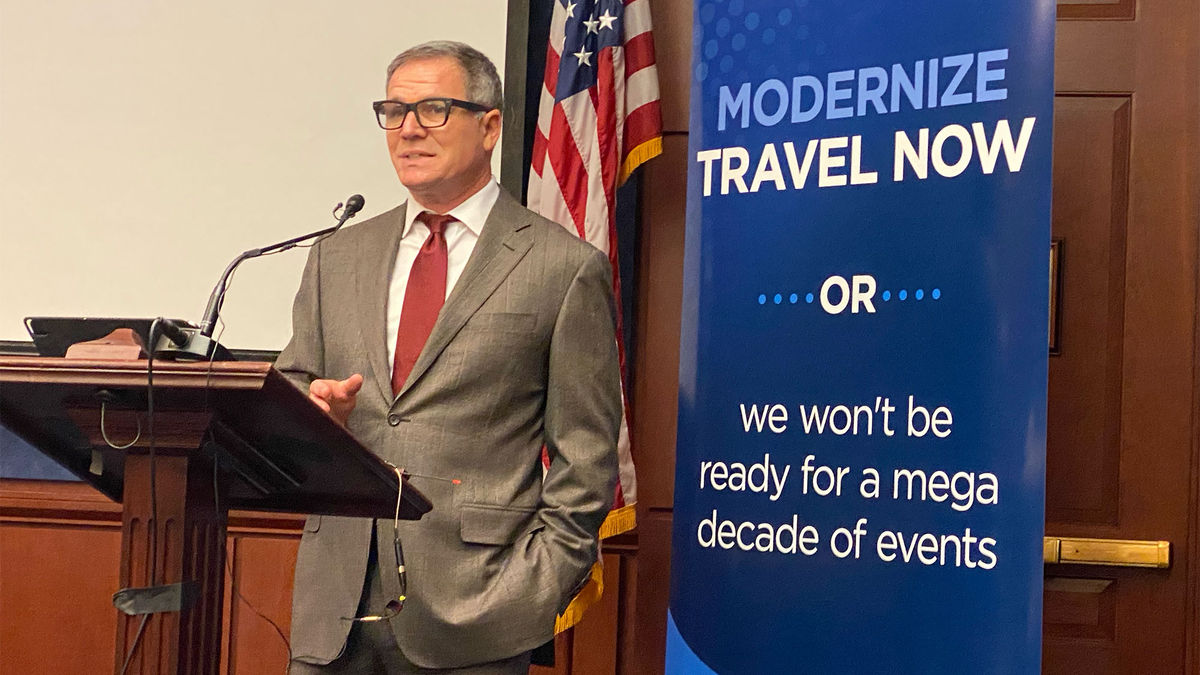
The government shutdown caused a 10% dip in travel bookings, according to U.S. Travel Association CEO Geoff Freeman, who said the U.S. is “driving travel” into the arms of its competitors abroad.
Speaking at the Phocuswright Conference on Nov. 20 in San Diego, Freeman called the longest shutdown in U.S. history “completely irresponsible” and said the travel industry “saw a substantial reduction in bookings, at least 10%.” He said some airline CEOs told him the decline through the end of the year could be even greater than 10%.
The shutdown shook consumer confidence that much. “It affected the willingness to get out there and travel for the holidays,” Freeman said.
The shutdown dip adds to the concerns of an industry that is projecting a 6% decrease in inbound travelers this year, a slide driven by Canada but there are declines in other markets as well, Freeman said.
“The most startling fact is that the US will be the only nation in the world this year to see a reduction in travel,” he said, adding that the U.S. had 79 million visitors in 2019 and this year will have 68 million visitors, 4 million less than in 2024. “We’re going the wrong way… And we’ve got to ask ourselves, why is that? Why are these travelers not coming?”
While praising some actions the Trump administration has taken to help the travel industry, such as securing over $13 billion to modernize air traffic control and reducing visa wait times around the world, travel deterrents include raising visa fees, cutting Brand USA funding and the overall perception of the U.S. as less welcoming.
And, Freeman said, there is “fear about coming to the United States, justified or not.”
“That is unlike, I think, anything we’ve ever seen before,” he said. “Fear of being detained at an airport or having a device searched. … This fear is out there, this negative perception is out there, and there clearly hasn’t been enough done to arrest that perception, to change that perception. That’s something we’re working with the White House on.”
Around events like the World Cup, Freeman said the administration “wants to be partners,” but added that “there’s no doubt there’s others in the administration who don’t mind that some of that fear is out there, and they see that as positive. So that’s a little bit of what we’re dealing with.”
A problem at the federal level, he said, is “the assumption that people are going to come here” and not understanding that we are in a competition.
“What I hear from our counterparts around the world is a big hearty thank you,” he said. “We’re driving travel to their arms. We’re making their markets more competitive. We’re making the U.S. less effective.”
Freeman recounted a time when the White House tried to support the travel industry but it backfired. He was at the White House when the administration launched the World Cup Task Force, and both President Trump and Vice President Vance said clearly that they want people to come to the U.S.
But during the same event, the vice president made a comment about visitors having to leave on time, and if they don’t, they would have to deal with Homeland Security Secretary Kristi Noem.
“And the headlines around the world were, “U.S. threatening to send the Department of Homeland Security after travelers,'” Freeman said. “It was unfortunate, it was not the intent. It was one of those moments when you think, ‘Please stop helping us.'”
link