Georgia Joins Hawaii, Indiana, Maine, and Missouri as Canadian Autumn Travel Booms, Now US Labor Day Weekend Sets Stage for a Record Tourism Season
Published on
September 1, 2025
By: Tuhin Sarkar

Georgia joins Hawaii, Indiana, Maine, and Missouri as Canadian autumn travel booms. This powerful wave of trips shows how people are moving again. Now US Labor Day weekend sets the stage for a record tourism season. The mix of colourful autumn landscapes, warm southern charm, and big-city events is pulling travellers in large numbers.
Georgia now booming travel with Hawaii, Indiana, Maine, and Missouri not by chance, but through strong airports, hotels, and events. Each state has welcomed millions of visitors who came to spend, explore, and enjoy. Canadians are crossing borders to see beaches in Hawaii, autumn leaves in Maine, and cultural hubs in Georgia and Missouri. Indiana’s events also drew record crowds. Together, these states prove that Canadian autumn travel is stronger than many expected.
Now US Labor Day weekend marks a turning point. It is no longer just a holiday but the start of a record tourism season. Families took road trips. Couples booked city breaks. International guests filled flights. Hotels reported higher bookings. Restaurants saw busy tables. The stage is ready for even more growth.
Georgia now adds in the same list with Hawaii, Indiana, Maine, and Missouri in showing how tourism can rebound fast. Canadian autumn travel is booming, and the US Labor Day weekend has given proof that demand is strong. With better marketing, new flight routes, and events planned for the coming months, these states are ready to welcome the world.
Georgia, in the United States, is one of the strongest tourism states in the nation. The Peach State blends history, music, art, sport, and natural beauty with some of the busiest airports and most famous events in the world. From Atlanta’s vast convention halls to Augusta’s rolling golf greens and Savannah’s riverfront squares, Georgia has built a powerful travel economy.
By 2024 and moving into 2025, the numbers tell a remarkable story. Georgia’s tourism is not only back from the pandemic years, it is now hitting new records. The state economy has earned billions from visitors. Hotels in both big cities and small towns have filled rooms. Atlanta’s Hartsfield–Jackson has again held the crown as the world’s busiest airport. New international flights have opened fresh doors for global visitors. Major events and festivals have drawn crowds from across the globe. Conferences and meetings have strengthened the role of Georgia as a hub for business tourism in the South.
This report explains in detail Georgia’s visitor economy, hotel income, airline connections, events, and conferences in 2024 and 2025. It uses easy words, short sentences, and clear facts so every reader can follow.
Georgia’s Visitor Economy in 2024 and 2025
Tourism is one of Georgia’s biggest economic drivers. In 2023, the state reported $79.7 billion in economic impact from visitors. This supported more than 463,000 jobs across restaurants, attractions, hotels, airports, and travel services. It also brought in $5 billion in state and local tax revenue.
In 2024, this strength continued. State leaders at the 2025 Georgia Tourism Day again confirmed that travel created around $5 billion in tax revenues in 2024. This means visitors not only enjoyed Georgia but also helped fund schools, hospitals, and roads.
The numbers show that Georgia has recovered fully from the pandemic slump and is entering a fresh growth cycle. The global backdrop has also helped. The United States in 2024 recorded $1.3 trillion in direct travel spending nationwide, proving that domestic and international tourism are once again driving the economy. Georgia stands at the heart of this recovery.
Hotel Income and Lodging Taxes
One of the best ways to measure tourism strength is through hotel income. Georgia collects both state and local lodging fees, and these reveal how strong demand has been.
The state charges a flat $5 fee per night per paid room. In the fiscal year 2023, this fee produced about $200 million in revenue. That means around 40 million paid room-nights were sold across Georgia hotels. Alongside this, state sales taxes from accommodation brought in more than $336 million each year from 2020 to 2023.
Cities also collect their own hotel-motel taxes. In the fiscal year 2024, receipts rose strongly:
- Savannah collected $47.4 million, helped by an increase to an 8% tax rate.
- Macon-Bibb gained $6.2 million.
- Marietta earned $3.9 million.
- Roswell took in $1.7 million.
These numbers reflect how both leisure and business travel are filling hotels.
Market data shows that hotel revenues in Georgia remained strong into 2024. In the second quarter of 2024, average daily revenue per room rose by around 1.4%, after a slower start in the first quarter. Analysts expect modest growth to continue into 2025, with a balance of leisure and business visitors.
Atlanta: World’s Busiest Airport and International Gateway
Air travel is the lifeline of Georgia tourism. Atlanta’s Hartsfield–Jackson International Airport (ATL) is the busiest passenger airport in the world.
In 2024, ATL handled 108.1 million passengers, the second-highest figure in its history, only behind the pre-pandemic peak of 2019. By August 2025, ATL offered nonstop flights to about 246 destinations in 53 countries, making it one of the most connected airports on the planet.
Several key route developments shaped 2024 and 2025:
- SAS Scandinavian Airlines launched daily service between Copenhagen and Atlanta on 17 June 2024, restoring direct links to Northern Europe.
- Etihad Airways began flights from Abu Dhabi to Atlanta on 2 July 2025, flying four times per week with plans to go daily by November 2025. This opens the Gulf, India, and Southeast Asia markets.
- Delta Air Lines added new seasonal domestic routes in 2025, including flights to Bangor, Maine and Rapid City, South Dakota, strengthening domestic leisure travel.
Other Georgia airports have also grown. Savannah/Hilton Head International saw more than 2.5 million total passengers in the first seven months of 2025, and Spirit Airlines launched new services in August and October 2025. Augusta Regional Airport again saw strong traffic during the Masters Tournament in April 2025.
Major Events Driving Tourism
Events are a cornerstone of Georgia tourism. They not only draw visitors but also fill hotels and restaurants. Some of the most important for 2025 include:
- The Masters Tournament in Augusta (10–13 April 2025). This is one of the most famous golf events in the world, drawing global fans, private jets, and packed hotels.
- Savannah St. Patrick’s Day Parade (17 March 2025). One of the largest St. Patrick’s celebrations in the United States, attracting hundreds of thousands of people.
- Dragon Con in Atlanta (28 August–1 September 2025). A pop culture convention that takes over downtown Atlanta hotels during Labour Day weekend.
- Shaky Knees Music Festival in Atlanta (19–21 September 2025). A major three-day festival at Piedmont Park featuring leading international bands.
- Atlanta Pride Festival (11–12 October 2025). One of the largest Pride events in the Southeast, with parades, concerts, and park events.
- Georgia National Fair in Perry (2–12 October 2025). A long-running family and agricultural fair that attracts visitors from across the region.
These events provide both steady annual tourism flows and spikes in visitor spending.
Conferences and Meetings in 2025
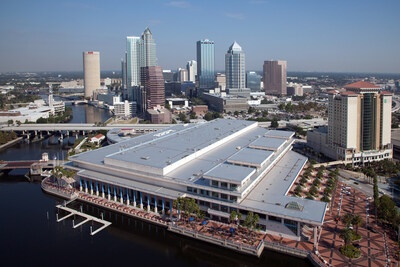
Georgia is not only a leisure tourism state. It is also a leading centre for conferences and meetings. Atlanta, with the Georgia World Congress Center (GWCC), is one of the largest convention destinations in the United States.
Key meetings in 2025 include:
- ITS World Congress 2025 (24–28 August 2025). A global meeting on intelligent transportation systems with delegates and exhibitors from across the world.
- AEE World Energy Conference and Expo (17–19 September 2025). A leading energy and sustainability event with professionals from business and government.
- Interwire 2025 (13–15 May 2025). The largest wire and cable technology trade show in the Americas.
- SECO 2025 (26 February–2 March 2025). A major optometry education and trade event.
- Devnexus 2025 (4–6 March 2025). A large developer conference focused on software and technology.
Savannah is also growing as a convention city. Its new convention centre has secured major medical and professional meetings, including the American Orthopaedic Foot & Ankle Society (9–13 September 2025).
Together, these meetings help keep Georgia’s hotels full during weekdays and build strong demand outside leisure seasons.
Hawaii, Indiana, Maine, Missouri, and Illinois Unite in Record Tourism Revenues, Canadian Visitor Decline, and New Tax Shifts in 2025
Tourism is a lifeline for many American states. It brings money, jobs, and pride. In 2024 and 2025, states like Hawaii, Indiana, Maine, Missouri, and Illinois saw both record growth and fresh challenges. Visitors came in millions. Hotels filled. Airports grew busier. Festivals and meetings pulled in global crowds. Yet, at the same time, one key market—Canada—showed a sharp dip. Political trade tension added to this strain. Some states passed new tourism taxes to fund future growth. This article explains the full story of these states. It shows their numbers, their strengths, and their plans. The language is simple so that anyone can follow. The facts are rich and explain how tourism really works in the United States today.
Hawaii: Paradise with Record Spending but Fewer Canadians
Hawaii is known worldwide for beaches, volcanoes, and aloha spirit. In 2024, it welcomed 9.69 million visitors. That was almost the same as 2023, but still lower than before the pandemic. Visitors spent billions. The U.S. West brought nearly 10 billion dollars, while the U.S. East gave over 6 billion dollars. But one group slipped. Canadian arrivals fell by nearly nine per cent, and their spending dropped even more—down almost 15 per cent to 1.05 billion dollars. For a state that counts on winter Canadian travellers, this was a warning. The high cost of flights and weak currency made many stay home. Hawaii is acting. The tourism board, through VoX International, is teaching Canadian travel agents about the islands. They want Canadians to see Hawaii as more than a beach, but as culture, tradition, and safety. In May 2025, Hawaii’s governor signed Act 96. From January 2026, the state hotel tax will rise to 11 per cent. Cruise fares will also be taxed. The money will support climate projects and protect nature. The cruise industry is fighting this in court, but the law is on the books.
Indiana: A Solar Eclipse Shines New Light
Indiana is not often the first state people think of for tourism. But in April 2024, it made headlines. The total solar eclipse crossed the state. Visitors came from across the country and even the world. That single event brought an estimated 148.5 million dollars to the state. It added 45 million dollars in tax revenues. Hotels, restaurants, and attractions all saw a huge lift. Beyond the eclipse, Indiana’s tourism is rising. In 2023, visitors spent over 16 billion dollars and supported more than 208,000 jobs. In 2024, numbers grew further, with Indianapolis reporting a record year. Conventions, sports events, and cultural festivals added steady demand. For Canadians, Indiana has no big direct campaign, but it joins forces with Brand USA. Trade events like Canada Connect help the state keep its name alive with Canadian agents and buyers. Indiana also runs its own IN Indiana campaign, showing fun and simple reasons to visit. Taxes also matter. Indiana counties charge an innkeeper’s tax. In 2025, some counties, like Delaware, raised their rates up to eight per cent. This helps fund tourism offices and local projects.
Maine: Growth in Spend, Loss in Canadians
Maine is famous for lobster, rocky shores, and autumn leaves. In 2024, it had 14.8 million visitors. They spent 9.23 billion dollars. This was up 1.8 per cent in money, but visits were actually down 3.1 per cent. People who came spent more, but fewer came overall. Summer 2024 was weaker than hoped. Visitor days fell more than 15 per cent compared to 2023. Weather and high costs played a part. The bigger worry came in 2025. Canadians, who usually cross the border in large numbers, dropped sharply. Reports showed crossings down between 16 per cent and 27 per cent in the spring and summer of 2025. That means fewer day trips, fewer overnight stays, and less spending in shops and motels. Maine leaders reacted. The governor publicly welcomed Canadians. Highway signs with greetings in both English and French were installed. The message was clear: Canadians are wanted. In taxes, Maine’s lodging tax stayed at nine per cent through 2024 and 2025. Lawmakers debated raising it to 12 per cent or adding seasonal surcharges, but no change was passed by September 2025.
Missouri: Steady Climb with Strong Spending
Missouri may not have beaches, but it has music, history, and the mighty Mississippi. From St. Louis to Kansas City to Branson, visitors find culture and fun. In the fiscal year ending June 2024, Missouri hosted 42.4 million visitors. They spent 12.5 billion dollars, which was up 5.1 per cent. The total impact reached 20.8 billion dollars. Tourism supported more than 145,000 jobs and gave 1.6 billion dollars in taxes. Hotels saw a 1.7 per cent increase in revenue, even though room-night demand dipped slightly. Airports in St. Louis and Kansas City neared pre-pandemic levels again. International tourism, including Canadians, grew nearly 24 per cent in 2024. That sounds big but was from a small base. Missouri still relies mostly on domestic travel. Campaigns like #ThatsMyMO push the state’s identity as friendly, authentic, and full of local experiences. Taxes did not change statewide in 2025. But cities like St. Louis and Kansas City continue to collect strong local hotel and tourism taxes to fund events and convention work.
Illinois: Breaking Records and Targeting Canadians
Illinois had one of its best years ever in 2024. The state welcomed 113 million visitors. They spent a record 48.5 billion dollars, generating 4.7 billion dollars in taxes. Tourism supported around 282,000 jobs. A big part of this success was the Middle of Everything campaign. This clever message positioned Illinois as the centre of culture, food, and events in the U.S. The campaign drove 2 million extra trips and over 675 million dollars in extra spending. Illinois also took clear steps in 2025 to attract Canadians. In May, the governor launched a special marketing push in Canada. Ads ran on social media. Partnerships with Expedia and Brand USA promoted Illinois directly to Canadians. The message was one of welcome and easy access. Taxes also shifted in 2025. From 1 July 2025, short-term rental platforms like Airbnb became subject to the state’s Hotel Operators’ Occupation Tax. This closed the gap between hotels and rentals and increased revenue fairness.
The Canadian Dip: A Common Problem for US Tourism
Across these states, one trend stood out: fewer Canadians visiting. In Hawaii, Canadians fell nearly nine per cent in 2024. In Maine, crossings plunged further in 2025. In Illinois, a special campaign was needed to attract them back. Why did this happen? A strong U.S. dollar made trips more expensive. Airfares were high. Gasoline and lodging costs rose. Trade tensions between the U.S. and Canada also created worries. In February 2025, the U.S. Travel Association warned that Canadian visits could fall by 10 per cent nationwide, equal to two million fewer visitors and 2.1 billion dollars lost spending. For border states like Maine, this was serious. For long-haul states like Hawaii, it cut into the winter season. For Illinois and Indiana, it risked fewer road trips and cross-border short breaks.
US Trade War Shadows
Beyond currency, a new trade war risk loomed in 2025. Tariffs and disputes between Washington and Ottawa made headlines. These issues may seem far from tourism, but they hurt confidence. Canadians may choose to spend their holiday money in Europe or at home if they feel unwelcome or fear costs rising. States know this. That is why Maine put up welcome signs. Illinois bought social ads in Canada. Hawaii trains Canadian agents. The fight for Canadian visitors is also a fight against political and economic headwinds.
US Tourism Taxes in 2025
Tourism brings money, but it also creates costs—roads, policing, nature care. States use taxes to balance these. In 2025, several states took action. Hawaii passed a law to raise the hotel tax to 11 per cent and tax cruise fares from 2026. Illinois began taxing short-term rental platforms like hotels. Indiana allowed more counties to raise innkeeper taxes to 8 per cent. Maine debated higher lodging taxes but kept the rate at 9 per cent. Missouri left the state rate unchanged but continued local city taxes. These moves show how states are planning ahead. They want both money for projects and fairness between different lodging types.
US Tourism Analysis: Lessons from 2024 and 2025
Several lessons shine from this story. Big events drive huge spikes. Indiana’s solar eclipse showed how a single moment can deliver almost 150 million dollars. Other states should plan around festivals, sports, or rare natural events. Marketing works. Illinois proved that clever branding brings real money. Middle of Everything did not just sound good—it delivered billions. Canadians matter. From Hawaii to Maine, their dip showed how fragile a market can be. Exchange rates, travel costs, and politics all matter. Taxes are changing. States are raising or reshaping hotel taxes. This will affect both visitors and businesses. Balance is key—funding projects without scaring away tourists. Diversity helps. Missouri’s mix of domestic travel, music, and urban growth kept its numbers solid even with shifts in other areas.
Tourism in 2024 and 2025 in Hawaii, Indiana, Maine, Missouri, and Illinois tells a story of both strength and challenge. Spending hit records. Jobs and tax revenues grew. New air routes and creative campaigns boosted visibility. But the decline in Canadian visitors reminded everyone how global forces affect local economies. Trade tensions and costs create dips that states must fight with welcome, marketing, and smart policy. Looking ahead, 2026 will bring Hawaii’s new hotel tax. Illinois will measure the success of its Canada push. Indiana will prepare for its next big event. Maine will hope for stronger border flows. Missouri will keep building steady growth. Tourism is not just numbers. It is about people crossing borders, sharing cultures, and leaving money behind that builds schools, hospitals, and jobs. The five states show that even with dips, travel remains one of the most powerful forces for growth in America.
Analysis: Why Georgia is Winning Heart of US Tourism
The success of Georgia’s tourism in 2024 and 2025 is not by chance. Several factors explain the growth:
- Global Connectivity: Atlanta’s role as an aviation hub ensures easy access for international and domestic travellers. New routes from Europe and the Middle East widen reach and attract high-spend visitors.
- Diverse Events: Georgia balances global sports like the Masters, massive cultural festivals like Dragon Con and Shaky Knees, and regional family events like the Georgia National Fair. This mix ensures tourism is spread across seasons and audiences.
- Strong Hotel Revenues: Both state and local hotel taxes show steady or rising income, proving that rooms are being sold at healthy rates. The $5 per-night state fee alone generates hundreds of millions.
- Conference Strength: The Georgia World Congress Center and Savannah’s new facilities anchor the state as a business tourism hub, filling hotels with weekday demand.
- Statewide Reach: Tourism is not limited to Atlanta. Coastal Savannah, historic Macon, artistic Athens, and scenic north Georgia mountains all benefit from visitor flows.
US Travel Industry Outlook for 2025 and Beyond
Looking ahead, Georgia is well placed for continued growth. The combination of global flights, international events, and strong hotel infrastructure makes it one of the most competitive states in the U.S. tourism market.
Air travel will expand further as Etihad goes daily from November 2025, bringing more Gulf and Asia traffic. Savannah will benefit from new ultra-low-cost carrier routes, expanding access for leisure travellers. Events like the Masters, Pride, and major conventions will keep hotel occupancy high.
Hotels may face some pressure on rates as growth slows slightly compared to the sharp rebound years. However, steady demand should maintain solid RevPAR. Policy support is also clear: both the state tourism office and local cities are increasing promotions and marketing.
Georgia has proved that it can unite leisure tourism, sports, culture, and business meetings into one of the strongest travel economies in America. In 2025, the state is not only keeping pace with recovery but setting a new record-breaking standard.
Georgia’s tourism story in 2024 and 2025 is one of strength, diversity, and growth. The state welcomed record numbers of visitors. Hotels earned hundreds of millions in lodging taxes. Atlanta’s airport maintained its global lead, while new international routes widened access. Events filled the calendar from March to October. Conventions and meetings cemented Georgia’s role as a hub for business tourism.
For travellers, Georgia offers everything: history, music, culture, food, festivals, and world-class hospitality. For the economy, it brings billions in spending, millions of jobs, and essential tax revenue.
In simple words, Georgia has become one of the brightest tourism stars in the United States. Its success in 2024 and 2025 proves that with strong connections, diverse events, and powerful planning, a state can turn travel into a pillar of growth for all its people.

link